
Introduction
What to wear to an Indian wedding: guest outfits for haldi, mehendi, sangeet and reception, plus colour etiquette, ceremony tips and a packing checklist.
For an Indian wedding, start with the dress code for the event you are attending. A saree, anarkali, lehenga, kurta set or tailored suit can be a good choice, depending on the ceremony and level of formality. Choose something you can sit, walk and celebrate in comfortably, then check the couple’s colour preferences and any religious-venue requirements.
There is no single outfit rule for every Indian wedding. A daytime garden celebration, an Anand Karaj in a gurdwara, a church service and a hotel reception may call for very different clothes. You also do not need to buy an entirely new wardrobe to be a thoughtful guest.
This guide offers practical outfit ideas for guests attending weddings in India or abroad. The examples are suggestions, not a dress code that overrides your hosts.
What to wear to each Indian wedding event
Make a list of the events on your own invitation before planning outfits. Not every wedding includes all the celebrations below, and an invitation to one event does not automatically include the others.
| Event | Outfit ideas | Practical detail |
|---|---|---|
| Haldi | A simple kurta set, salwar suit or washable daytime outfit in the requested colour. | If you will join the turmeric activities, wear something you would not mind staining. |
| Mehendi | A printed kurta with palazzos, a light anarkali or a festive co-ord. | Keep cuffs, jewellery and loose fabric away from your hands if you are having henna applied. |
| Sangeet | A light lehenga, saree, embellished jumpsuit, kurta with waistcoat or dressy separates. | Test the outfit with a few dance steps before packing it. |
| Wedding ceremony | A saree, anarkali, salwar suit, formal kurta set or another outfit approved by the hosts. | Check coverage, head-covering, footwear and seating arrangements with the venue or family. |
| Reception | A dressy saree, lehenga, evening gown, bandhgala or suit, according to the invitation. | Match the stated formality; a reception does not automatically mean black tie. |
Read the invitation before choosing clothes
Look for three things: formality, colour guidance and venue instructions. “Festive Indian,” “garden party” and “black tie” are different requests. If the invitation says “Indian or Western formal,” choose whichever option you can wear confidently and respectfully.
Check the couple’s wedding website too. A separate dress code for each event is more useful than a single label for the whole weekend. Save the details on your phone so you can check them while packing.
If the wording leaves you unsure, ask one specific question rather than guessing. For example:
We’re looking forward to celebrating with you! Would a teal anarkali and a navy kurta set suit the ceremony, and do we need to bring head coverings?
For a reception-only invitation, you can ask whether a suit or an evening dress fits the occasion. You do not need to ask the couple to approve every accessory.
Daytime outfits for haldi and mehendi
Haldi: choose an outfit that can handle the occasion
If the hosts request yellow, follow their chosen palette. If they do not, ask before assuming everyone must wear it. For a hands-on haldi, our practical suggestion is a comfortable outfit that is easy to clean, with footwear that works on the actual surface: lawn, paving or an indoor floor.
A simple kurta and straight trousers can be easier to manage than a heavily embellished outfit. If you are borrowing or renting, check whether participating in turmeric activities could breach the care terms.
Mehendi: leave your hands and sleeves free
Try a printed kurta with palazzos, a light anarkali or coordinated separates. If you expect to have mehendi applied, choose sleeves that will stay away from your hands without constant adjustment. Open your bag, use your phone and manage any fastenings before the henna is applied.
Plan for the setting as well as the outfit. A shaded courtyard and a sunny lawn can feel very different. A dupatta you can secure neatly is more practical than one you need to hold in place all afternoon.

What to wear to the wedding ceremony
Choose a complete outfit, including the layer, scarf or footwear you may need at the venue. Try sitting in it before the day, especially if the family tells you that part of the ceremony involves floor seating.
Religious and family instructions deserve their own check. Do not assume that every ceremony has the same requirements:
- Anand Karaj in a gurdwara: arrange a suitable head covering and shoes you can remove easily. The World Sikh Organization of Canada’s visitor guidance says all visitors should cover their heads and remove their shoes. Ask the hosts how to prepare for their venue.
- A Hindu or Jain ceremony: ask whether your event includes entry into a temple space and what that venue requires. A hotel ceremony and a temple visit may have different instructions.
- A Muslim wedding celebration: check the location and family’s guidance on clothing and head coverings. A nikah in a mosque and an evening hotel celebration need not share the same dress instructions.
- A Christian wedding: check the church and reception dress codes separately, including any guidance about white or bridal colours.
A useful question is: “Will we need to cover our heads, remove shoes or sit on the floor at any point?” It gives you concrete information without relying on broad assumptions about a community.
Evening outfits for sangeet and reception
For the sangeet, make movement your fitting-room test. Raise your arms, take a long step and turn around. A beautiful jacket that restricts your shoulders or a skirt you keep stepping on can become frustrating during a dance celebration.
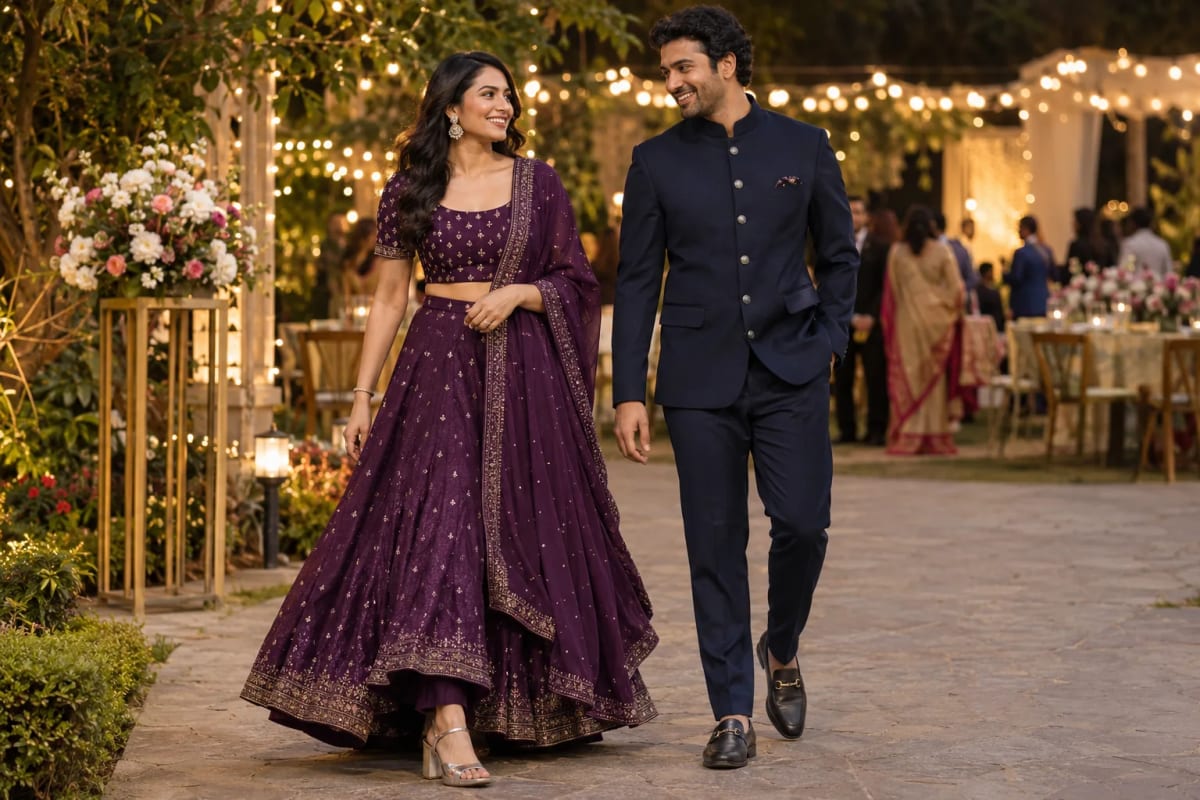
For an evening reception, you could choose one main detail: an embroidered jacket, a rich textile, statement earrings or a lightly embellished outfit. You can dress festively without adding every accessory you own.
If you prefer Western formalwear, check that it is welcome for that event. A tailored suit, a dressy jumpsuit or an evening dress may suit the invitation. Keep any necessary ceremony layer with you if there is no time to change.

Which colours should guests wear or avoid?
There is no universal colour ban covering every Indian family. If you have no guidance, ask about red, white and black before settling on them. Red can be bridal, white can carry mourning associations in some communities, and expectations around black vary. David’s Bridal’s guest attire guide discusses these distinctions, including the different treatment of black at modern receptions.
Once the hosts confirm their preferences, build a colour combination from clothes you already like. Teal with muted gold, blue with a textured jacket, or rose with simple metallic accessories are styling ideas you can adapt. They are not permission to ignore a specific family request.
It is also sensible to ask whether a colour is reserved for the wedding party. You do not need to match the décor unless the invitation specifically asks you to.
Outfit ideas for women, men and guests choosing their own style
Sarees, suits and separates
A saree can be a lovely option if you enjoy wearing one and have time to arrange the drape. If it is your first time, organise help before the event or try a pre-draped version at a fitting. Check that you can walk, sit and use the bathroom comfortably.
An anarkali with trousers, a salwar suit or a kurta-and-palazzo set gives you other ways to dress for the celebration. For a lehenga, have the hem checked with the shoes you plan to wear. Choose accessories around the neckline and fabric rather than treating a full jewellery set as compulsory.
Kurtas, jackets and tailored outfits
A kurta with well-fitting trousers and a waistcoat is a flexible outfit formula. A bandhgala or tailored suit can work for a more formal event. If you are considering a sherwani, ask what level of dress the family expects so your choice fits the occasion.
Check sleeve length, trouser hems and the fit across your back. Wear new shoes around the house before travelling, and pack a familiar pair if your schedule includes several events.
Choose a silhouette you feel comfortable in
You do not need to force yourself into an outfit category that does not suit your identity or comfort. A tailored kurta set, longline jacket with trousers, dressy separates or another host-approved look can be a useful starting point. If you need accessible footwear or adapted clothing, plan around those needs first.
Can non-Indian guests wear Indian clothing?
Yes, when it fits the hosts’ invitation and you wear it thoughtfully. Brides’ Indian wedding attire guide notes that guests do not have to share the couple’s cultural heritage to wear traditional attire.
Ask for help choosing and fitting an outfit rather than treating unfamiliar garments or ceremonial accessories as a costume. You can also ask whether formalwear you already own would be suitable. Being prepared, responding to the invitation and following the family’s instructions matter more than buying an expensive look.
Plan for weather, travel and your budget
Before buying anything, write down what each event actually needs. You may be able to repeat trousers, shoes, a jacket or a bag while changing one main piece. Borrowing an outfit can work well if there is time to check the fit and agree on cleaning.
If renting, confirm delivery, return dates, alteration rules and what happens if travel is delayed. If buying, ask about the garment’s lining and care instructions. A fabric label alone does not tell you how comfortable the finished outfit will feel.
For warm weather, try the complete outfit in conditions as close as practical to the event, including any lining or jacket. For a cool evening, pack a layer that works with your look. For rain or outdoor venues, choose shoes for the ground you will actually walk on.
Travelling with a saree or embroidered outfit? Pack accessories separately, protect delicate work and check how the fabric should be pressed. Keep one usable outfit in your cabin bag where airline rules and luggage space allow.
A small packing checklist for wedding guests
- Your outfit, underlayers and the correct shoes for each invited event.
- A scarf, dupatta or head covering if the hosts or venue request one.
- A comfortable backup pair of shoes and suitable socks if needed.
- A compact bag that holds your phone and essential personal items.
- Spare fastenings or a small repair kit appropriate for your garments.
- A weather layer and a plan for pressing clothes after travel.
- The saved event schedule, addresses and dress-code notes.
Pack according to your own needs. This is a practical checklist, not a requirement to carry a full emergency kit to dinner.
For couples: make the dress code easy to understand
If you are organising the wedding, give guests a few usable examples alongside each event’s dress code. Separate preferences from requirements: “yellow welcome” gives guests a different message from “please wear yellow.”
Here is sample wording to adapt:
Mehendi: Relaxed festive clothing. Printed kurtas, light suits or comfortable separates are welcome. The event is outdoors on a lawn, so please choose suitable shoes.
Ceremony: Festive Indian or Western formalwear. Please follow the venue instructions below for head coverings and footwear. Contact us if you would like help choosing an outfit.
Reception: Evening formal. Sarees, dressy separates, gowns, bandhgalas and suits are welcome. Please wear something you can celebrate in comfortably.
Add your actual colour requests and religious-venue instructions before sharing this wording. A DreamWedds wedding website template gives you a place to bring event information together. You can also send this guide alongside the confirmed details to help guests plan.
Frequently asked questions
Do I need a different outfit for every event?
No universal rule requires a new purchase for each celebration. Plan for the events you are invited to, their dress codes and the time available to change. Repeat pieces where they suit the occasion and can be kept clean.
Do I have to wear yellow to a haldi?
Check the invitation. If yellow is requested, follow the hosts’ wording; if no colour is mentioned, ask rather than assuming. An easy-care outfit is a practical choice if you will take part in the activities.
Can I wear a black dress or suit?
Ask about that event. The family may welcome black at a reception while preferring another colour for the ceremony. Your hosts’ guidance is more useful than a blanket internet rule.
Is a saree compulsory for women?
Do not assume it is. Check the dress code and ask about alternatives such as an anarkali, salwar suit or formal outfit you already own. Choose something that fits both the event and your comfort.
What if I cannot afford the suggested outfit?
Ask whether an outfit you already own would be appropriate. You can describe it or send a photo if that feels comfortable. Borrowing or repeating clothes may be a better choice than buying something that strains your budget.
Your final outfit check
Before you leave, check four things: the right outfit for the event, any venue requirements, shoes you can manage comfortably, and a secure fit. Once those are covered, you can spend less time adjusting your clothes and more time enjoying the celebration.

Wedding RSVP Website: What It Should Do and How to Set One Up
20 NOV 2026
Wedding RSVP Wording: 25 UK Examples & Reply-By Dates | DreamWedds
20 NOV 2026
Wedding Hashtag Ideas: 100+ Examples and a Free Generator
20 NOV 2026
Wedding Invitation Wording: 25 Examples for Every Style
20 NOV 2026
Do You Need a Wedding Website? A Balanced Guide
20 NOV 2026
Digital Wedding Invitations: Types, Etiquette and When to Send
20 NOV 2026
Best Free Wedding Website Builders: What’s Actually Free?
20 NOV 2026

When Should I Send Wedding Website and RSVP Links? A Practical Timeline
19 NOV 2026

What Should I Put on a Wedding Website? A Section-by-Section Guide and Checklist
19 NOV 2026
From Mehendi to Reception: Building a Multi-Event Indian Wedding Website With DreamWedds
18 NOV 2026
Wedding RSVP Website: What It Should Do and How to Set One Up
20 NOV 2026
Wedding RSVP Wording: 25 UK Examples & Reply-By Dates | DreamWedds
20 NOV 2026
Wedding Hashtag Ideas: 100+ Examples and a Free Generator
20 NOV 2026
Wedding Invitation Wording: 25 Examples for Every Style
20 NOV 2026
Do You Need a Wedding Website? A Balanced Guide
20 NOV 2026
Digital Wedding Invitations: Types, Etiquette and When to Send
20 NOV 2026
Best Free Wedding Website Builders: What’s Actually Free?
20 NOV 2026
When Should I Send Wedding Website and RSVP Links? A Practical Timeline
19 NOV 2026
What Should I Put on a Wedding Website? A Section-by-Section Guide and Checklist
19 NOV 2026
From Mehendi to Reception: Building a Multi-Event Indian Wedding Website With DreamWedds
18 NOV 2026
